Blog

  • letter no. 6 – start small, but start

    letter no. 6 – start small, but start

    Sometimes we do not move forward because we don’t know what to do next. And sometimes we don’t move forward because we know exactly what to do next, and we’re terrified. (I am raising my hand. It’s ok. You’re not alone. Don’t be terrified of the alone-ness too.)

    I felt deeply called out when Helen Macdonald wrote in her book H is for Hawk that falconer and writer James White began to self-sabotage because he was afraid of his own success. I am terrified when I start to do well, to succeed. I think I am terrified of trying to go beyond that marker of success and failing utterly. It’s not a rare fear, you know? It’s not as if nobody has been afraid of failure before. Afraid of success before. I’m still not sure I understand this fear myself, but it’s very real and I’ve let it hold me back from moving in the right direction. 

    I don’t have any profound things to say to you about this. I can’t conquer that fear for you. Most of the time I haven’t even conquered it myself. But I want us to take the next step anyway. What is that step? Break it down, love. Don’t tell me it’s getting published or writing a book or something. No, I want to hear the next step. Maybe that means finding one place to submit a story. Maybe it means finding out how much going back to school would cost or even just sending that same magazine another essay. Choose a step, and if it’s too big, break it down until it’s manageable. Don’t try to write your bestseller if you’ve only ever written essays. Maybe instead choose a time and place you’ll commit to writing each day. Don’t put down grad school if you’ve never taken a college class – start with learning what you’ll need, or signing up for History 101. 

    I don’t want you to play small. That’s not what I’m telling you to do. Dream big, girl. Dream big and take time to lay on your back in the park making shapes out of the clouds while you let your mind roam over all the bright, beautiful possibilities there are for you. But don’t come home and think “Well if I want to graduate college with honors, then I’ve got to pick a great college and sign up for all the hardest classes right now, this afternoon, day-job be damned.” Let the dreams take their time in coming true while you work on the little steps that are within your grasp. I want you to dream big and play reasonable – there’s almost always a simple, reasonable step you can take right now. And when we come back next week I want us to have taken it. Yeah, both of us. I’ve got some small steps in mind already. I could submit this work to that site, or pick a theme and develop an outline for an essay I hope to submit. There are actions each of us can take. I’m looking at you hard right through this screen: are you with me? I’ll be back here next week. I’ll have taken a step in courage, without waiting for all the fear of success or fear of failure to stop me. Meet me here in seven days. Let’s do this, darling.

  • Letter no. 5 – not a part-way girl

    Letter no. 5 – not a part-way girl

    [Note: this was written six months ago, while I was still pregnant.]

    I think a lot about willpower and discipline, which might be because I wrestle so much with actually building them. I often act like a part-way sort of person: I build really good habits part of the way and then call them good enough, because that’s when it gets really hard to keep improving. 

    I don’t eat sugar often. People like me say we’re “sugar free” and it really is true; but even though I don’t eat sugar and I DO eat tons of veggies, I also eat lots of heavy food. Like cheese. I eat a LOT of cheese. (And eggs. And sugar-free, flour-free scones, slathered in butter.) So my friends are always impressed when I order a simple coffee with heavy cream or an almond milk latte with sugar-free vanilla, or something. And they admire my willpower when I don’t eat pasta. But my zucchini noodles are literally dripping with alfredo sauce. It’s a healthy habit that’s been built up part-way and then left. 

    I’ve done the same thing with writing. I get a few guest posts published, get paid for an essay I submitted to an outdoor writing site, and I think I’ve arrived. I stop working so hard. I write less and less frequently. And then suddenly my own blog is facing neglect and I’ve started using my toddler’s nap time for Gilmore Girls instead of a writing session (while I eat a low-carb pizza piled in pepperoni, because you can’t watch Gilmore Girls without eating.) And all the while people keep telling me what a great writer I am, so I don’t get bothered about the good habits that I haven’t kept developing.

    In my more discouraged moments I think of myself as a part-way kind of person. I take on the whole persona and in an instant I can see a whole future for myself full of part-way plans that part-way succeeded. Maybe they’re enough to help me stand out just a tiny bit from the crowd, but I know that my habits and efforts will have more potential if I will sit down and put in the time. When I call myself a part-way person, it’s like claiming an identity. I don’t just picture that half-fulfilled future, I start to believe it’s all I’m capable of. I start to believe I’ll always quit just before the finish line, right when it gets the hardest. When I think of myself as a part-way person, I start to move in that direction.

    That is exactly what I don’t want for us. There is never a reason to believe that we’ve failed until after it’s actually happened. And even then, failure at one step or stage or goal can just be a catalyst to the next one, if you respond to it that way. Why imagine the worst and subtly call ourselves back and downward in that direction? I don’t believe that whatever you imagine or believe hard enough will just happen to you, but I do believe that if we consistently tell ourselves we’re going to fail, that eventually we’ll stop trying not to fail. We’ll stop trying at all: there will soon be nothing left at which to fail. 

    This letter is a tiny success story in itself. I set a goal to write every day. It’s an indefinite goal because I have a baby coming sometime who will absolutely interrupt that streak. But let’s just say right here that I plan to write every day until my baby is born. So far, I’ve reached day eight. I don’t think I’ve ever written for eight days in a row before. This is something new. This is me leveling up that writing habit I’d already created. 

    I have goals to improve my eating habits – less cheese and butter, more healthy carbs. I have goals to improve how I spend my time – more reading, more cleaning, more time with my toddler; less social media. I’ve gotten stuck on these before, pictured that bleak future in which I’m only capable of part-way achievement. I don’t want to let myself walk that direction anymore. I’m sitting down with these habits and believing they can change, no matter how slowly and incrementally. 

    Here’s to us, babe. Here’s to the habits we’re willing to cultivate beyond the part-way stopping points. Let’s do this.

  • on inspiration – letter no. 4

    on inspiration – letter no. 4

    It is popular these days to talk about creativity as if inspiration didn’t matter. I think this is an oversight. It’s simple to say that the important part of making things is to make them; to keep making and creating day after day without waiting for inspiration. There is nothing inherently wrong with this model, except that it’s an oversimplification. Sure, we shouldn’t be waiting for creativity to find us. We won’t write great American novels or paint masterpieces if we’re lying around, waiting for the brilliant idea to come. Creativity does have to be a habit. I’m just convinced there’s more to “inspiration” than that. 

    I think inspiration is important, even if it’s not as vibrant and sudden as spontaneous combustion, or doesn’t go off like fireworks in our minds. But I think inspiration can also be cultivated. If you stop and explore what you’ve written or painted or composed or designed, I imagine you’ll discover that your best work happens at the intersection of a faithful creative habit and inspiration. And when you stop to explore where your inspiration comes from, I think you’d find a consistent source or sources for it as well. 

    I used to just think I liked long walks, but now I’m realizing that I have my greatest capacity and inspiration for creativity when I can regularly get out for a walk by myself. Even if it’s not very long, it’s like a reset button. I come home a bit refreshed, a bit energized, and with my writing mind a little bit clearer. Maybe it’s the blank space of being unplugged for a while. Maybe it’s that plus the exercise, or maybe the chance to see beautiful things like light on the willow leaves at the park or a stained glass window in a neighborhood house or even a well-planned garden: something about walking without talking, pushing a stroller or glancing at my phone gives my brain a creative boost. 

    It’s not as if I come home with new ideas every time I take a good walk. More often than not, it feels like I’m just stretching my legs. But my best ideas and my best writing all come when I regularly clear my mind, and I do that best when I’m walking. I can’t conjure inspiration, but I’ve learned I can make space for it to land. Maybe it’s a ten-minute walk before the sun gets too hot. Maybe it’s a long walk with a flashlight after dark, watching the growing crescent moon and listening to the crickets. Sometimes it’s just sitting outside on the patio without books or phone while my toddler naps – not walking but letting my mind wander all the same. Regardless, it’s clearing this sort of landing space that I know will eventually invite the good ideas.

    Maybe your inspiration comes on Pinterest. Maybe it comes when you lie on the floor with your feet on the couch and stare at the ceiling. Maybe it’s a hot cup of coffee or a good playlist or yoga. But it matters that you know, that you find that thing that creates the most space for inspiration and do that thing repeatedly. It should be as much a habit as your actual work. Don’t let that space disappear under the pressure of life. It’s easy to think that time for self-care is selfish or unnecessary or that you’ll get back to your evening sweat session when there’s more time, but more often than we realize, that ongoing time of quiet is one of the most crucial players in our work and creativity. If you have to let it go for a while, don’t stay away too long. 

    I did a study on rest throughout the Bible last year, because I think I was trying to figure out how I could rest in such a busy season of parenting. I mostly discovered that rest is pretty much a commandment in the Christian faith. It seemed a bit odd to me still, but I knew I was getting burnt out on a daily level trying to squeeze seven productive days into each week, so I began trying to find ways to rest. I’m still not very good at it, but I’ve found it’s not only giving me a better ability to function, it allows me to find greater creativity too. 

    I’m not trying to make this into a sermon – I’m just becoming aware of a correlation between a tenant of my faith and the way it actually brings my creative goals closer to reality. I’m trying to say Look – down-time is so important it’s even in this major book of faith, the one I believe in. So create some restful space with your hard working habits, and watch inspiration step into that invitation. 

    Find your rest: I dare you. Don’t wait for inspiration, go out and clear a place for it in your life, like weeding a garden even when you can’t see the seedlings yet. The flowers will grow, they just need time and a little space to breathe.

  • go live first – letter no. 3

    go live first – letter no. 3

    I think it was Hannah Brencher who said that writers aren’t people who are good at writing about life; they’re the people who’ve gotten really good at living. There is a ring of truth to her words. You can’t write if you’re not living anything. We can all see how true it is for non-fiction; you can’t write what you haven’t experienced. But I think it’s true for fiction too. You can’t write about lives in any believable way if you’re not living in the thick of them. How can you create people if you don’t live with people, love people, mingle with them and celebrate with them and mourn and dance and eat and take long walks with them? There is a vibrancy and a grittiness to real life that we can’t ever write if we don’t ever live it first. 

    There’s a lot of reasons this is hard, but can we just talk about two of them for a second? 1. It’s easy to get caught up in our own heads, trying to write and stumbling against our own lack of experience without realizing it. 2. It’s also easy to swing the other direction, to get so caught up in trying to live a life we can write about that we forget to just live, to be present and unguarded, to be alive in the moments that will later become the stories we have to tell, without having taken notes on or wondered at them as they happened. 

    I’ve done both of those before: lately I’ve been living all in my own head, trying to write about life without sinking my teeth into the meat of it myself. It’s a cyclone of an existence. I think of John Green’s book Turtles All the Way Down where he opens up about his experience of Obsessive Compulsive Disorder and how it becomes, for him, a whirlpool of thoughts spiraling tighter and tighter in dangerous directions that feel completely beyond his control. On a very different scale and in a manner very much more IN my control, that is what it’s like to live stuck inside my head, and maybe anyone’s head. When you close the doors and sit down to analyze what you have without letting in light, fresh air or new ideas, you spiral around and around in the same frustrations, fears, and failures. 

    I began to come out of that shell late this summer. One day during camp, I walked outside onto the sunlit deck and stood, soaking in the morning warmth for a moment. There were kiddos already running back and forth, but there were also mamas. And they were sitting. There were cups of coffee on the arms of their chairs. They weren’t just wiggling their toes in the sunshine before they walked back inside to do the dishes, they were sitting outside drinking deep from the cup of mountain air and children’s playtime and mama-friendship that life was holding up to them in that moment. And I had almost missed it. I had been missing it most of the summer. I don’t want to miss moments like that for the rest of my life; they’ll be the moments that come back in stories one day too. They’ll be the moments of conversation that inspires me, of wisdom that empowers me, of joy that refreshes me. Maybe quiet moments sipping coffee together won’t come up in dramatic retellings of the stories of my life, but they will influence and shape and nurture me as a writer all the same. 

    Learn to live, darling. Learn to look up from your desk in time to see a squirrel leap into the trees, learn to laugh at the weird, new, odd things your toddler does that could, if you’re not careful, drive you crazy. Learn to laugh so hard you pee a little and learn to cry when the people around you – your people – are crying too.

    But I have a word of caution for you. As you learn to live, don’t think so deeply about it that you begin to spiral in on yourself again. Life is not a race to collect stories or a contest to acquire the richest material. There’s no prize to the one who’s lived in a tiny home and a mansion and also backpacked through Europe: you can live in a cul-de-sac and vacuum your split-level stairs every week and still be living the life that people need you to write about. Trust me on this.

    When I moved to Colorado in my early twenties I believed that adventure was out there and I was going to find it. And I also believed that if I didn’t find it, I’d never be the writer I wanted to be. I’d never have the words or inspiration or opportunities that a writer needs if I wasn’t out there living the adventure that everyone wants to read about. It took me a very long time to realize how wrong I was. Adventure wasn’t just waiting in the wild aspects of a life few people get to live; adventure was waiting in the mundane, belly-laugh moments that everybody gets to live. I was given the adventure of a lifetime – the lifetime of one human being, which is always, always an adventure. I had no idea then how poignant, how rich, how write-able that one wild adventure would be. And wouldn’t you know it, here I am with two children and a tiny cottage where I can sit and watch the squirrels, where my toddler counts to ten and inserts “four” whenever he can’t remember what number comes next. Here I am with my one computer and the under-the-stairs bedroom that makes me feel slightly like Harry Potter, and the gallery wall of art complete with kitchen cooling racks that I use as photo grids. There is more adventure in my three red picket fence gates than in the life I thought I would have when I moved out here, single and hoping that a good story would find me.In all the advice that we give writers to sit down and write the thing, don’t forget to go out and live the thing too. I mean yeah, you won’t get far at all without plunking yourself down and opening a tab to your writing platform of choice, instead of streaming another episode. But you won’t get far streaming another episode anyway. You’ve got to be wildly, vastly, energetically present in this one grand life of yours. You can’t hope to write it if you don’t live it. So go live, darlings. Go live deep and real and hard and beautiful. Then we’ll write.

  • your story matters – letter no. 2

    your story matters – letter no. 2

    It’s going to be worth it. It matters. These are the things you need to hear today.

    Writing is worth it. Choosing a place you will write consistently and a way you will measure writing consistently and then doing the actual writing – consistently: this is all worth your while. It matters in ways you won’t understand at first. It matters when it feels dull, uninspired, worthless. It matters when it feels alive, golden, real. It matters all the times in between. And I’m using writing because it’s what I know but let’s pull in your own dream real quick: gardening, running, further education, travel, buying a house – it’s worth it. Stay with me.  Translate this whole post in your mind as you read. Put in your goal whenever I talk about writing. These words are meant to be true for you, too.

    I know what you want: you want to have done the work. You want the work behind you. You want to see the fruit of your labor. Girl, I want to see the fruit of your labor too. I believe it’s going to be beautiful. And I truly believe it will come. But I know how it won’t come and I know one of the ways that it will. It won’t come by wishing on a star, by taking long inspirational walks in the woods, by sitting outside long enough. It won’t come by reading good books and calling them “field work”. It won’t come by attending a conference and calling yourself a writer with a fainthearted name-it-and-claim-it attitude. 

    It will come by writing. It will come by writing the days you believe you’re a writer and the ones you believe you’re not. It will come by writing on the days when you felt wildly inspired and also writing on the days when you were sure you’d have to go back and delete every word, unthink every idea that led to those words. (Yeah. It’ll come those days too. Don’t discount them – remember all the days that I told you matter? Those are in there too.) 

    I’m only partly here to reprimand you. And we do need it, a little. All of us begin to think that if we put in the work partly, that should be good enough. (It’s not.) Or we begin to think that we can’t put in the work. (That’s false.) No, you need to put in the work completely. You have to be all in and you have to be in it for the process, the work, the long haul. You can’t be in it for the applause that will not come on a predictable timetable or in an expected fashion. And you can put in the work completely. Honey, maybe you’re working full time and trying to workout and keep up a social life and all that you see is the ways in which you can’t. Then start with five minutes, girl. Start with five minutes and do it day in and day out. Read Atomic Habits and figure out how you can make that tiny, atom-sized habit a real one that sticks. You can write a book five minutes at a time. I believe in you. If I can write while raising a toddler, house-hunting and getting ready to birth a second child into our family, then you can write during your day job, your crazy social hours, your wacky gym schedule. 

    There’s more to what I’m saying though. The second thing I’m saying isn’t so much you can or you have to but it matters that you do. It does matter. Your book is beautiful, babe. The world needs what you carry, as Janessa Wait says. She’s right. You’re carrying the stories you need to write even if you don’t recognize them yet. That’s ok, darling. Sometimes it takes a while. I’m still in the process of recognizing some of my own stories. Stick with it. What you find will be worth it. 

    People will need to hear the words that only you can say. Please write them. Please write them hour by hour, or minute by minute. Please write them as slow or as fast as they come. But write them. Remember the fire that burns in your stories: think of it like a campfire. Sometimes campfires are little – they burn in the back corner of a yard and people stop by it to roast a marshmallow or warm their hands in between the exciting night games. And sometimes campfires are huge old bonfires. They roar and crackle so hard people need to stand back and turn slowly so they don’t get too hot on one side.

    Friend, your fire matters no matter how huge and bright it burns. Your story matters. Tell it. The house you want to buy can be a home where you welcome people, where you welcome yourself finally. That degree can be a means of inspiration for others, a means of joy for you. That perfect latte pour can be your pride and joy and make somebody’s day, all at once. Any creative or artistic endeavor is a thing of weight and glory, darling. Never forget this. It matters. Your work matters.

  • a long direction – letter no. 1

    a long direction – letter no. 1

    [I thought about calling this series “letters in the quiet” because I’ve been offline, writing the things I think I need most to hear: but it’s coming slowly home to me that maybe I’m not the only one who needs to hear some of these words and so now they’re letters to be shared. Don’t read this thinking I’ve reached all my goals. Really, I’m just a girl who needed this pep-talk too.]

    It’s possible – just maybe possible – that what you needed to hear isn’t what you expected at all. You need to hear it right when you are waiting with expectation. Right when you are waiting for an expectation. You think there are rules to follow in this dream of yours. (and maybe there are, but there is a time for rules.) You think there is only one right way to get to the place you are going. (And maybe you are right about that too, but not the way you thought you were.)

    I think the only way to keep going in a direction is to just keep going. And maybe that sounds stupid or simple or cut-and-dried, or maybe it even sounds like the rules you thought I was about to toss out the window. Well, like the hero of a movie always says when he gets caught with his pants down, I can explain

    Of course there are rules: there is one big rule. Keep moving. If you want to be a writer, put your butt in a chair and write. If you want to be a runner, stop browsing Nike’s newest running shoes, lace up the ones you have and walk out the door. If you want to be a therapist, start by signing up for some classes. You can’t just talk to your own therapist forever about how you want to do this too, one day. But then your therapist, if they’re worth their salt, will tell you the same thing I’m telling you. It matters a hell of a lot more that you begin and keep going than that you have the same path to get there that everybody else does. 

    A friend of mine wants to major in Psychology. A lot of people go to college knowing they want to major in Psychology, and a lot more go to college knowing they have to pick a major and they pick Psychology eventually. My friend started with cosmetology. She went to beauty school, which we have learned not to call it anymore, and has worked with her favorite and least-favorite clients in a salon in a city near where we grew up ever since. It doesn’t sound very glamorous because it isn’t. But tomorrow is her first day of classes at a new college and in a few years she’s going to have the exact same psychology degree as all the people who just graduated high school and haven’t had to hunt down their love of psychology through the hair-cut therapy sessions delivered compassionately to the soundtrack of a hair-buzzer and a scissors. Isn’t that worth something – that knowing? 

    Hell, let’s just make it personal. I want to be a published author. And yeah, the only way to get there as I’ve been told again and again is to get my butt in the chair and write. I’m beginning to realize it doesn’t matter as much what I write as that I am writing. Can we agree on that for a second? Because sometimes I go around and around in my own mind, just trying to determine what I should be working on right now and instead of writing I think about writing and puzzle about writing and make writing complicated when it should be as simple as sitting down and getting out the words.

    I’m a lot like everyone else trying to write. We all know the struggle: you worry about developing your own voice, but how are you ever going to do that if you don’t write? You worry about finding what it is you love to write but how are you ever gonna do that if you don’t write? You have to write. But who cares what you write? 

    I think we are too lenient on ourselves because we are so hard on ourselves. I can explain that one too. You are hard on yourself for not choosing a direction. You don’t know what to work on so you worry about choosing a direction and because you’re so nit-picky about a direction you give yourself permission not to write until you have something figured out. But you’re not going to find success like that. Success comes at the end of consistent hard work. Greatness is out there and it will find people, but it will find those who’ve put in the years of behind-the-scenes training. Who’ve put their butts in chairs and written things nobody has ever or will ever read. 

    The invisible work is the work that matters, do you hear me? The invisible work is where you’re going to be built. The invisible work is boring and unrewarding for a long time and everybody who’s somebody has had to deal with that. They’ve had to figure out what they love about this work so they can keep going when there isn’t a soul cheering them on, because for years and years there probably won’t be a soul cheering you on (except me, right here and right now) and you’ve got to be ok with that – you’ve got to get your butt in your chair and your fingers on your keyboard for different reasons than just the cheering. Trust me on this. 

    So don’t self-sabotage. Don’t hold back and wait for a direction; don’t stop the habit just because you’ve finished one stage, don’t give up on a direction just because you didn’t start walking towards that degree the day after high school ended. It’s not how you get there that matters. It’s going in the same direction, day after day, until you arrive. I trust you babe: you can do that. And when you get there? That’s when the applause begins.

  • that summer/winter life

    that summer/winter life

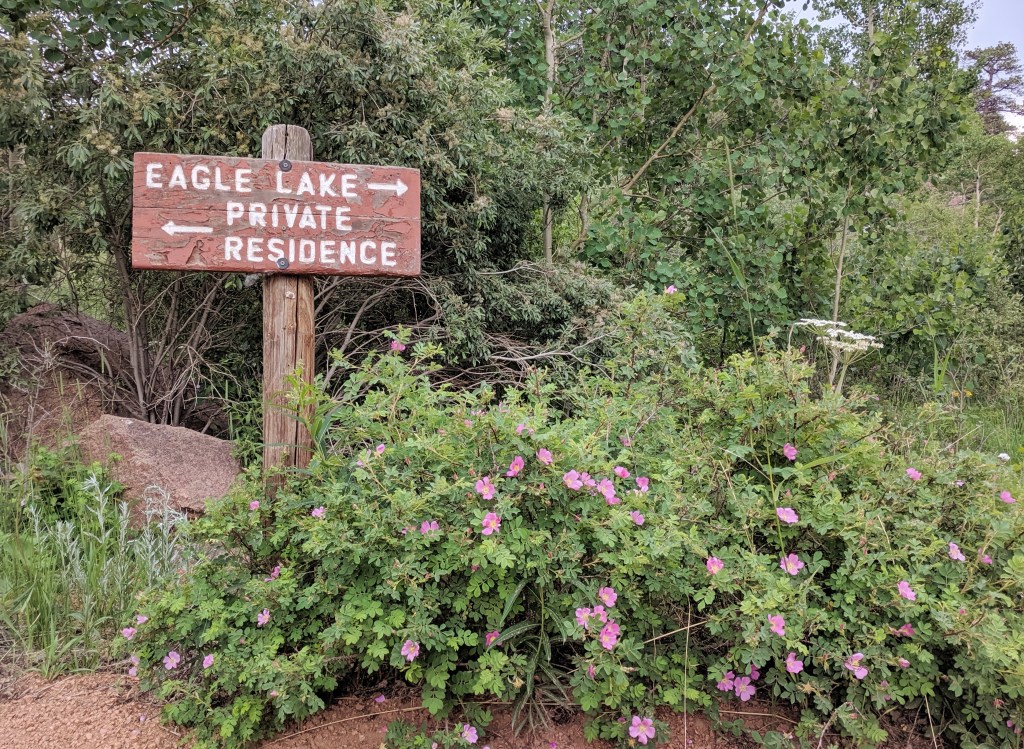
    The first time I saw the sign pointing one direction towards private staff housing and another towards Eagle Lake Camp, I felt like a subtle barrier had been thrown up between that place and the rest of the property. It was before I knew anything about camp; at first I just assumed that it was somebody’s house, separate from camp operations. It seemed like the sort of outlet one should tiptoe past in order not to disturb the residents. After we joined the Navigators camp staff ourselves, I learned that that’s where we’d be housed during the summers, and I became grateful for the subtle separation. And now that I do indeed live here three months a year, turning left at the sign that points right down towards camp, that separation has slowly diminished.

    The distinction on the sign is important though: it directs the camp staff and camper families in the right direction; away from the private housing of people who live here full time without working here. Towards the business center of camp. Towards the beach and the blob, the cabins and the check-in tables. Away from the two and three year olds who are just trying to nap on a Sunday afternoon, and their mamas who need a few hours of quiet.

    There is a similar distinction between the life we live at camp and the live we live away from camp. I never expected quite this level of separation between my off-season community and rhythms, and the changes we make “up the mountain”. Yet they exist. Our first summer, I expected to visit friends in the city rather frequently; if I came down every week to get our mail and we came down on the weekends, surely we’d have plenty of time to join the bar-b-ques, the Bible studies, drink coffee on our back patios of a Saturday morning together? But by the end of the summer, I had only seen one friend with any regularity, and that was because she planned to move across the country at the end of the summer.

    Then August came, the tenth and final week of camp rolled around on a Sunday morning and rolled past on a Friday. Campers left, and then counselors, and then program coaches, and then we did. And I realized suddenly that the old wooden sign directing the summer staff in one direction and the families in another had never really kept us apart. The girls I’d discipled over the summer took pieces of my heart back to school all across the country and even straight up into Canada. Some of my friendships would be renewed the next summer and some would not and I realized as we moved back into the range of backyard cookouts and enthusiastic greetings at Sunday School drop-offs that I missed the summer piece of my life as much as I’d missed the winter piece through camp season.

    I didn’t know how to reconcile these fragments at first. How could I maintain lasting friendships with people if I was going to be gone all summer? And how could I create real bonds at camp if I was only going to say goodbye – maybe forever – after ten weeks? And yet just like the private driveway up to staff housing that loops back around to form a circle with the road, there are unexpected connections through the pieces of my year that begin to thread them together.

    Camp is an undeniable part of our lives and unless my husband wanted to change jobs, there’s no way simply wouldn’t move to camp for a quarter of every year. Yet our friends “down the mountain” have taken an interest in our camp life; they offer to come up for Chapel on Sundays and ask how they can pray for us through the summer. They ask about Grant’s role and my role and they flex their tight schedules to meet me for coffee when I do, finally, come down to collect our mail.

    At camp, right when I wonder if I can keep my heart open for another season of loving hard and saying goodbye, I am met by people who have answered this same question with a warm and thorough yes. People I never expected to meet take time to learn my name and greet my toddler with high-fives. Counselors I thought I barely knew are giving me hugs, winning over love I didn’t know I had left to give. I find myself looking up strange combinations of names and numbers that make up Instagram usernames so that I can follow this one to Alaska and that one to Wisconsin through their long winters until I maybe see them in the spring.

    Camp will always be seven miles from home as the crow flies and remain an hour’s drive on a good day. There will never be a complete reconciliation between these two halves of life. But the way I treat the distance matters. It makes a difference that I remain open to the love these separate communities have to give – to me and to each other. Perhaps they will always seem farther apart than they truly are, but it will always be up to me to see past the dividing ridges, to recognize how close and even intersecting these two sides of the same mountain are.

  • getting stuck

    This post is full of instructions. They’re instructions that we all need at some time in our tumultuous years. Sometimes the days begin to feel long and pointless. Maybe you’re sick – sick for a long time and it feels, or is, debilitating. Maybe you’re just low on inspiration and working the 9-5 because it seems that is all life has for you. Maybe Netflix has convinced you that you owe it your attention, despite nagging doubts. Pretty much anything can suck us down into the stuck place; a job, finals, parenting, moving, dim living spaces, too much pasta.

    Please know I’m not talking about depression here. I know depression can be influenced by all those things and more but you usually can’t just “get un-stuck” when it comes to mental health. You’re worth enough, valuable enough, to close this blog post right now and get help. But if it’s just a weird little inward battle to get up and get dressed on those days that feel pointless, then this is for you.

    I’ve had plenty of my own stuck days. In fact I think I wrote this during one of them. (To be honest I was just looking through my unpublished posts and decided it was time for this one to come alive.) But stuck days don’t last forever – I know this because after months of feeling sick and watching the light at the end of the tunnel receding as fast as I advanced, I’m beginning to come out into the light. It’s just been little things – morning sickness for four months, a sinus infection for as many weeks, a toddler who’s getting faster as I’m getting slower and more pregnant. But for all that, the sun is coming out. Joy is breaking through (accompanied by warmer weather, hey!) and now I want to share some of the things that have helped me walk through it with hope. In fact, many of these things are still working habits mine – practices to fight back against the dark we all face any given day.

    Do what you can. Go slow, as slow as you need without critizicing yourself at all. But if you can get dressed, then do it. Getting dressed will make you feel better. And hey, now that you’ve come this far, eat some breakfast. Try to get some protein in. Do what you can, even if it’s a microwaved hotdog or a bowl of breakfast cereal. Do what you can. If you can get through work, do it. If you need to take a nap and safely enclose your contented little babes in their crib for half an hour while you sleep, you set yourself a time and get those 30 winks. Do what you can.

    Move a little. Maybe exercise just isn’t really an option. Ok. I’ve been there. I’ve had my afternoons of laying on the couch watching old movies because my body won’t move without pain (or just nausea. Babies, I tell you.) But if you can, take a walk around the block. Get a little air. Maybe stretch out with some gentle yoga. Movement will help your mood, gently lift you just a little bit. Trust me – I’ve felt it happen on the most disappointing days. Heck, if you don’t have any physical restraints, push yourself a bit and get in some solid cardio. You’ll thank me later.

    Go outside. Maybe the most you can do is go sit outside. Maybe you can’t even do that. Find a sunny window. Or sit on the patio if you have one. Walk around the yard, around the block, down to the park or coffee shop. Take a long hike if you have the ability. Exercise plus fresh air is a vital combination.

    Set a goal. Pick something small that you can achieve within a day or so. Write a card to a friend, finish the dishes from last night, wash a load of laundry, cook a meal at home. There’s a sense of achievement that comes when you finish a task or a goal, no matter how small it is.

    Put down the phone. I know it seems small, but try to replace a few minutes of phone time every so often. Pick up a book. Stare out the window and let your mind wander. Take that quick walk around the block we’ve been talking about. Take a few minutes to stop the games, the comparison of social media, the branding and promotion and posting to prove that your life is good too. Just enjoy your life for a few minutes. I don’t say there’s anything wrong with your phone, only that we humans have the capacity to get so sucked in that it begins to dominate every nook and cranny of our life.

    I hope these ideas help you. I hope they remind you that even on the ugliest, hardest days you can find a small ray of light. I hope these ideas walk with you through the dregs of winter and into the spring. Here’s to you who feel stuck. We’ll make it, friends. Sunshine is coming.

    PS – it’s a girl!!
  • beauty will save the world

    beauty will save the world

    I have always loved this quote, even before I knew where it was from, but I have not always believed it. Even when I heard it perfectly illustrated at a conference about the arts – about the necessity of beauty – even then I didn’t believe it. There was a seed of Midwestern Baptist doubt that nothing, not even the beauty I crave like living water, could be so instrumental in saving the world. But yesterday I found a new layer of understanding.

    I wish I could say it was a new understanding altogether but my spirit has rarely learned like that, in leaps and bounds. I grow slowly and deeply and my roots have to push deeper into a thing, a truth or a season or a reality, before I can see it slowly growing in my own life. The thing about beauty is it’s been growing on my heart for the past year and a half and only now can I shape into words how this belief is changing me.

    But I don’t have to just believe that beauty will save the world anymore. I’ve heard stories so blatant they spell it out nice and slow for even those as stupid as me. The story I heard this spring was the story of a woman in a choral group that sang old latin hymns. She loved them for their beauty even though she didn’t believe the truth of them. And yet gradually, that beauty became so rooted in her heart that she began to wonder if these words about Christ and saving and hope could actually be true. There were other influences in the gradual renewal of her beliefs, but it began with the hymns of a dead language whose words were very much alive.

    Yesterday it came home to me in my own way: I had tucked my toddler in for bed and stepped outside for a walk. We live in the woods, at camp, with other families: there were people who’d hear him if he cried, and I only wanted to walk the quarter-mile loop of the driveway a few times. There were birds singing. A sunset glow was gathering on the opposite hill. Wildflowers were blooming – some I know, like shooting stars and blue flags and golden smoke and alpine bluebells. Even more that I want to learn were pushing their blossoms up in places I didn’t expect, catching me off-guard with perfect tiny white blossoms and surprising fragrances. Last year’s rose hips marked the places where this year’s roses will bloom.

    I walked in that wide loop for a long time, just savoring the freshness of the air and the presence of the flowers and the singing of the wind on the tops of the hills. It’s moments like that which give me the ability to go back to being a mama with more gentleness. Walking and solitude and beauty give me the chance to be restored. They save the way I talk to my toddler, or my husband or my friends. They change the way I write, process, imagine. They save the way I see the world, the way I understand beauty and its small saving graces. Yes, beauty will save the world, one wildflower, one tired mama at a time.

    There’s hope in this knowledge; when I can’t find or get to beauty, I can know it still exists. It still changes things. It still saves in it’s own small God-made ways. And when I can, it saves me, sends me back to God again in ways that don’t quite happen in a church. Yes, beauty will save the world, sometimes whether we realize it or not.

  • dandelion moments

    dandelion moments

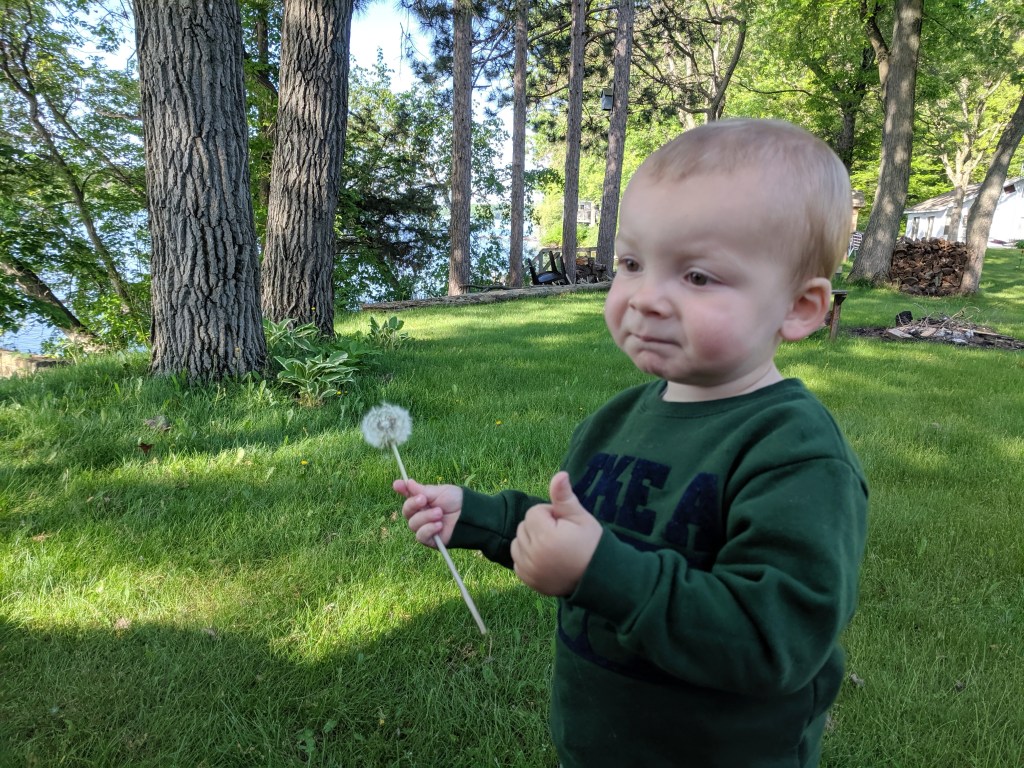
    I was standing down by the lake-edge, blinking back tears of goodbye and wishing this rich green Minnesota environment could be mine all the time. And then I turned and saw my toddler blowing a dandelion that had gone to seed, the magic of it as much in his eyes as in the wish he doesn’t know how to make yet. The almost-physical ache I had felt faded soft as the lapping lake water. I could be ok, with moments like this that slip in with unexpected happiness. I chased the boy around with my camera, instructing him to blow. Mom even grabbed him a new dandelion when the first one was out of seeds. I went inside with thoughts of dandelion hope echoing through the punchy grief of my goodbyes.

    I have a tendency to let moments like this disappear into the humdrum of my days. When I curl up on the couch in the evening and my husband asks how my day was, these aren’t the things I think of first. My automatic response is to describe the lakeshore, the tears, the goodbyes, the ache I didn’t want to feel. And then I look forward to the next hard thing: I say words like, “And now we’re home and he’ll have to get used to not being the center of attention all the time; he’ll cry and hang on my legs, and ask for special treats like Larabars and his pacifier.” I forget the dandelion wishes until the very end: “There were a few good moments. Erik was so cute, blowing a dandelion with his lips all full and pursed. But I don’t know if I got any good pictures.”

    I’d like to think we color our perspectives beginning with the best and happiest memories, but I don’t think it’s true. I felt joy just as strongly as pain but I focused on what was hard and hurtful instead of what was beautiful. It’s easy to do, honestly. Hard moments do make a strong impression on us. Hurt is real. Goodbyes suck. And just like that, the rain clouds that lasted for half-an-hour are all we can remember of our sunny days. It’s like a trick we help our own memories play. Like the movie Inside Out; let Sadness touch one memory and it all turns blue. No amount of scolding from Joy can stop the infectious touch spreading across a myriad of dandelion moments.

    It feels like that’s an inevitable truth; the memories that sit strongest with you will color your whole day – maybe eventually your whole life. And what if your whole life, day by day, turns blue? But I don’t think that’s the whole picture, not quite.

    I think we have a say in the process. I think we have a voice in the way these memories shape us – we give them some of their power and we can take some of it away. And maybe we’ll never be able to erase the hurting parts of our days. Goodbyes will always be painful, won’t they? But we don’t need to erase pain to feel joy. We just need to feel it, to really see it and honor it and give it the place it should have. And that might take some fighting.

    I think we can turn our lives bright again in small but meaningful ways if we really pay attention. The deep, the real and the magnificent exist for each of us if we are willing to notice it and hold on. I can’t tell you how you will do this. There isn’t a prescription for joy because no two lives or circumstances are the same. No two people feel and capture and remember emotions the same way. Your dandelion wishes will look different from mine, even if you have a dandelion-blowing toddler trundling across the dewy grass, enchanting his aunts and grandma all together. But that said, I do have a few ideas.

    1. Write it down. Sit with your thoughts and memories at the end of a day or early the next morning and just scribble a few notes of the things that made you smile. Dandelion blowing. The airplane ride with a toddler that actually went really well. Dewy grass on my feet for one last morning, before we returned to dry Colorado. Let these things grow into a habit and you will begin to find the permeating ability of joy.
    2. Take pictures. Maybe only one in one hundred will be instagram worthy and honestly, isn’t that ok? Taking a photograph can help you remember. It may pop up in your memories, or maybe Google photos will throw it into a video for you. Or your mother will ask you for those photographs and years later you’ll find them tucked in a box or an album somewhere, and you’ll remember.
    3. Ponder. When you have those quiet seconds, the waiting seconds when you could pick up a phone and scroll, just review your own hours. Look for the beautiful things. It’s there, it’s waiting – just hunt through your own memories and dig them up. Color your days in the in-between seconds. And maybe when you find yourself lying in bed at night, you’ll realize that even with the goodbyes and the long travel and the way he cried all the long drive back from the airport, it was a day of dandelion moments.
  • your story

    your story

    I have had a head cold for three weeks and counting now. I’m not even disgusted by going around the house, picking up my used tissues, or scooping up the pile of snotty toilet paper that’s inevitably accrued next to my bed each morning. I just do it. I’m tired of it, sure, and I cry with frustration sometimes when I just want to take a short walk without feeling exhausted or blowing my nose in the cold again, but whatever. I’ll get better eventually. (I’ve been to a doctor and there really is nothing serious wrong with me. Don’t worry.)

    In an attempt to self-medicate against the discouragement of feeling like crap all the time, I’ve been binging good books, listening to all the podcasts, and enjoying conversations even though they kill my already-sore throat. But none of those things have had the substance I’m looking for. No matter which encouraging thing I listen to or what lovely ideas and lives I read about, they don’t really cheer me up. Because I start to get jealous. Even in the little conversations, envy of my friends’ non-congested voices and un-achy throats starts to creep in. I don’t like jealousy, and here it is even in the moments when I’m just trying to find a little courage.

    I’ve never cemented the habit of simply not comparing myself to others. It’s ugly, written that bald-faced and plain, but it’s true. I compare my voice, my figure, my writing style, my perceived success to how I perceive theirs. I even compare the things I like doing to the things others like doing. Do I host like she does, do I have a vision like that, have I written anything that motivating, will I ever be able to publish as much as her?

    I could, and should, ruminate instead on how full and beautiful my own life really is. I tend to forget that my own story is the one that matters most to me – not in a selfish way, but in a centering way, a way that recognizes the influence each of us has and uses it. I think when we pay too much attention to the stories we aren’t living, we make our own lives less effective, less deep and true. It’s like cleaning your house while you’re mentally planning a menu, and interrupting yourself to add to the grocery list. Nothing will get done the same way it will if, while you clean, you plan and focus and strategize how you intend to clean the house to your best ability. Not that our lives are really much like a house, but I think you can picture the difference between a clean house with the dishes drying on the counter, and a clean house with the counters bare and flowers arranged on the kitchen table.

    We’ve got to come back to our own stories. I am realizing how imperative it is to really see our own lives, begin to recount the story of ourselves. Knowing where we are and where we came from is crucial if we want to see the beauty in where we are going. I know this all sounds vague, but I think acting on it is simple. Start noticing. See the people in your life, see the patterns, see the joy and the pain. Some of it needs changing, sure, but a lot of it is just good stuff, even if it’s hard good stuff. And be thankful, too. Recognize what is good and cling to that – write it down or photograph it or get a tattoo or throw a dinner party. Remind yourself where you fit in the grand scheme of humanity, of the Church; in your community, your family, your own house. Give yourself an orientation tour of this life you live, and then use your one sweet life to make that space beautiful.

    And sure, it’s good to draw inspiration from the stories other people are living. Perhaps they’ve had ideas that sparked your own. Perhaps their story was the courage you needed one day. But don’t settle into comparison. Take that courage and turn it into something difference-making.

    I’ve never experienced the spring rush of allergies like so many others, but that’s what the doctor thought my head cold was. I protested, informed him I wasn’t allergic to anything. He smiled, and reiterated, “We see a lot of allergy cases this time of year. You’re not alone; you’re in good company.” That statement somehow gave me a bit of hope, even though it wasn’t what I wanted to hear. Allergies, good company – hearing that give me the framework in which to set the story of being sick for three whole weeks. It’s a grounding piece of information. And even if I still think that the snotty nose my toddler had three weeks ago is part of this, or the sinus infection I just fought off, or the lowered immune system that pregnancy brings – at least I have a framework.

    On my way home from urgent care, I was listening to a podcast by Christie Purifoy and Lisa-Jo Baker. The more I listen to their podcast, the more I usually compare – the more I wish my story was similar to one of theirs. But today even while I listened, I came to a reminder: my story is my own. I can’t exchange it for Lisa Jo’s or Christie’s, but I shouldn’t want to either. If I could, I’d miss out on all that was meant for me. Allergies or no allergies, I don’t want to go along so envious that I miss my own life; do you?