Author: Gianna

  • the God of math

    the God of math

    I wake up some days already ready for bed. I don’t think I am completely alone. All it takes is children, especially children who wake up at night asking for Mommy or a piece of toast or wanting their pacifier back to feel as if you’ve spent half your day’s energy before you dropped back into bed at 3 am.

    It’s days like this that I need to remind myself of God. God is good at math. Stay with me – a blog is a terrible place for a deep-dive into algebra and I am aware of it. God knows how many hours are in a day. Twenty-four. Ask him. He’s not stupid. He also knows I have kids. Two. An even easier number to count to than twenty-four. But (and this is where the numbers get tricky) with two kids pulling you different directions every waking moment, twenty-four hours can begin to feel more like forty-eight, or even (hang in there) like forty-eight hours that require seventy-two hours worth of energy. That’s three days and we can stop climbing there because you get the picture.

    So suddenly the really simple math of one day = twenty-four hours is less simple. It’s less like addition and more like the quadratic formula. Once it was “8 hours of sleep = 16 hours of energy = 8 hours at work + 2.5 hours for meals + .5 hours of exercise + 1 hour of driving + 2 hours of in-between things and down-time + 2 hours of eating the food”. Now it’s more like “6-ish hours of sleep + 2 cups of coffee (drunk cold because of children) = 12 hours of energy + 1 dinner of cold cereal + 2 childrens’ and 1 adult meltdown + a quick trip to the Starbucks drive through = negative 3 attitudes”. 
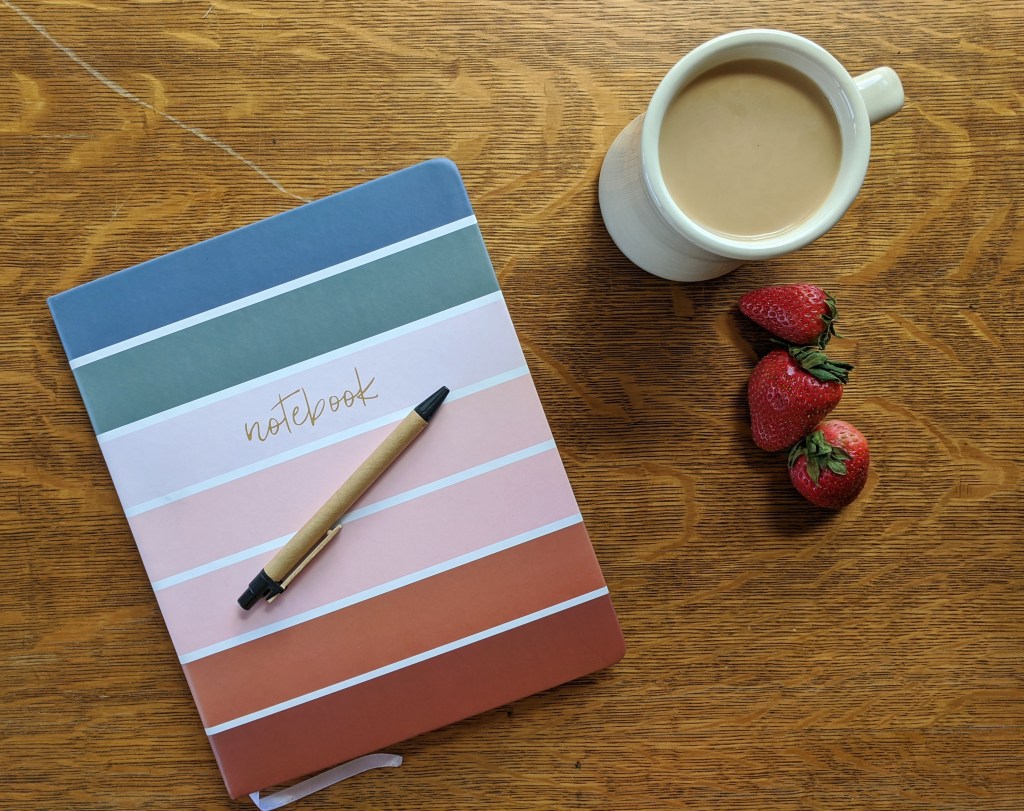
    Things don’t seem to add up anymore. And that’s without dividing by 2 months quarantined at home, or raising to the power of 3 legos stepped on. I could go on. If you feel tired just looking at that kind of math, you’ve got the answer right. Tired. It’s tired. I’m tired. Tired is the answer even if you sneak in a third cuppa (luke-warm this time.) I think the quadratic formula involves imaginary numbers and I’m equally confident in guessing that your energy by the end of many days feels equally imaginary. (Also, can we please just raise a red flag about imaginary numbers in math? Seriously WHAT THE HECK. Ok, rant over.)

    The math, I reiterate, is exhausting, confusing, and doesn’t seem to add up. This is where it’s nice to have a God who’s good at math. He can solve for X. Or for Mom, which is more important. He knows how much energy I need to get through a day. I mean, if he can number the thick hairs on my head (constantly changing as I enjoy what seems like postpartum balding), then surely he can figure out how much energy I’ll need after laying awake in bed for an hour, and getting up two times during the night. He hasn’t left me without resources. I have the strength of Christ waiting to be availed. I have hope that one day, in heaven, our attitudes will never slip into the negative and by all that is gracious I will never step on a sharp toy again. 
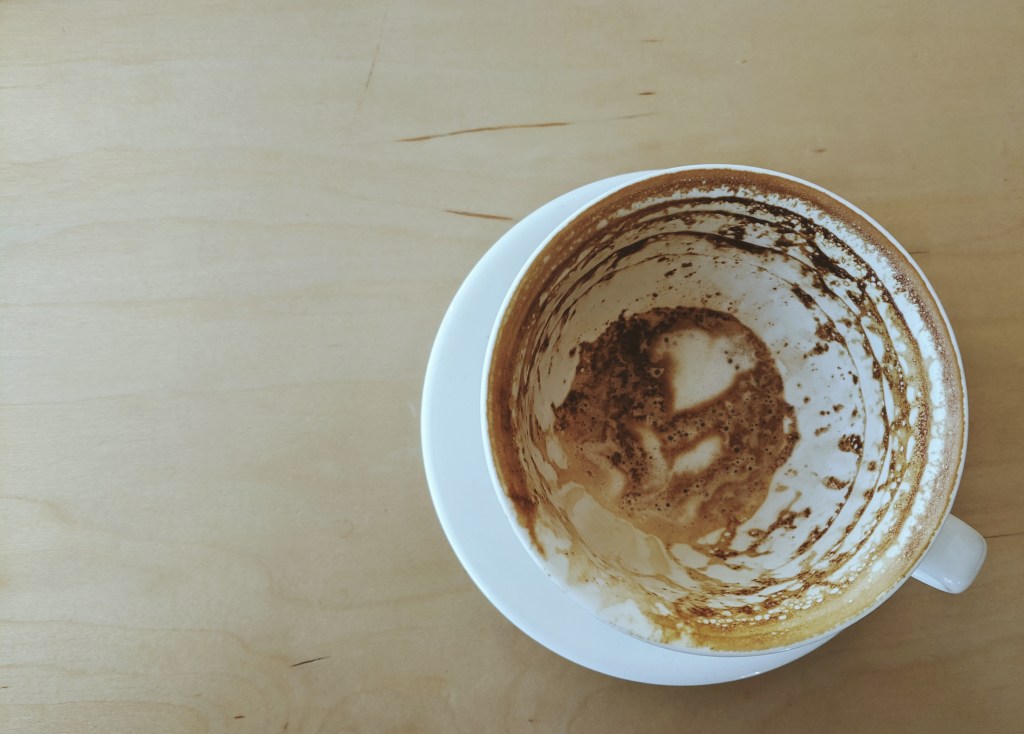
    I think of the woman with her unending jar of oil or the five loaves that filled five thousand bellies. There were two mites dropped into the offering box at the temple – all the widow had to live on – and I’m betting you she didn’t go home and starve. Maybe the prayers muttered over a morning cup of coffee have a power of multiplication just like the legos. Maybe the quiet of two kids napping simultaneously has spiritual power to calm the wind and the rain. I’ll probably never beat God at the word problems that read as long as a Thursday afternoon, but I begin to understand that the math will always add up. The bottom of the coffee cup with it’s dried brown rings is always steaming again in the morning like a very promise of God: there is always enough energy for the hours.

  • the weather ski

    the weather ski

    It is not winter anymore, but I think this essay is more about hope and heart than snow, and maybe even in June we have things to learn about the cold.

    When I was in high school, my family went on a ski trip to a town a few hours drive east of our home. It was a once-each-winter trip. Most years we’d drive there in the morning and drive home after they closed, unpacking the ski boots and snow pants on sore feet at midnight. This year, some friends who lived nearer the slopes were out of town, and offered us the use of their home. We accepted gladly.

    In the morning, when we were cooking a big breakfast and slowly stretching out our legs, we noticed a single cross country ski standing straight up out of a drift in front of the kitchen window. It was blowing slightly in the wind. Mom chuckles at the kitchen sink, and points it out to Dad when he joins her. They laugh together, and the sound draws all five of us kids, pushing and crowding around their shoulders. 

    “Maybe it’s a Weather Ski,” Dad jokes, and puts on a radio announcer voice, “Yes, the weather ski is bent at just a ten degree angle, so light winds today. Keep a watch out for black ice.”

    My brother chimes in: “Friends, the weather ski is at a forty-five degree angle; looks like a real blizzard out there!” We laughed together companionably and then scattered again, leaving Mom still washing dishes and the curved, colorful ski bobbing in the intermittent breeze.

    Now it is springtime in 2020. I never planned to check the weather as part of my morning routine. Usually I just dress for whatever the day might bring. Jeans, a t-shirt, a jacket, a down vest over it all if it’s cold. But this year, almost the entire nation is under a quarantine. We’re fighting a once-in-a-lifetime pandemic. And since I’m not getting dressed in a hurry to take my toddler to play dates and library programs, I’m slowing down to check the weather. That single app on my phone with its prediction of sunshine and temperatures is the indicator of whether we’ll even get outside. My mood seems to rise and fall with the weekly highs and lows. 

    Some weeks are warm and sunny. The highs reach for the 70’s for days in a row. I put on shorts and dig out 3T shorts for a toddler who still calls them pants and we find sun hats for him and his sister. We wrangle out the double stroller and head for the grassy spaces in the park. The weather has smiled on us. In weather ski talk, maybe the ski is fading and peeling in the heat – a warm one today folks! 

    But intermittently, cold days come. Back in Minnesota, the ski is probably bobbing lightly in the wind while its snowdrift takes on a new layer of white. Here, our red-brick patio slowly disappears under a steady film of flakes. So does my energy. The two-year-old runs from one part of our tiny home to another until he feels the cooped atmosphere too. Then he lags and droops like a wind-bent ski-tip, clinging to me when I let him and sliding to the floor in despondency when I try to get up, do the dishes, finish the laundry – anything to spur us into motion. 

    Sometimes it is cold for so many days that I stop checking. I don’t open the curtains in the morning. There doesn’t seem to be much point. Who wants to look at the tired, frozen pile of snow on the patio anyway? The little blue toddler truck that he pushes with his feet is as deeply buried as the real vehicles that we’re not using – that’s what happens when you stay at home for a full month I suppose. I take one look at the picket fence and see the snow in delicate heaps on its ridged top, and I lose hope for the day. The sudden mischief of a black squirrel brushing snow off in bursts, left and right, as he scampers along the rails is lost on me. I’ve already turned back inside to wonder what will become of our day, stretched long and white until the distant evening.

    I forced myself out for a walk one cold day. “Won’t I need a coat?” I wondered out loud. “No, just a vest,” my husband reassured me. He gave me a searching look, as if he knew I’d already resigned myself to all the warm layers I’d wear to fend off the cold. “Well then I’m wearing a hat,” I replied in defiance of his optimism. 

    I felt like a stranger to the sunshine, walking down the sidewalk towards the park. The air was cool, but not as cold as I had anticipated. The snow had stopped. The sun was lowering towards dusk but miraculously still held some warmth. I let myself take big breaths of the air I hadn’t smelled in days. It was cold and unscented in the dust and impossibly fresh. It tasted like morning air, spring air. My soul seemed to tiptoe forward with cupped hands and shining eyes, like a shy child. I smiled at the masked strangers as we gave each other wide berths – walking off the sidewalk around each other when we passed. 

    I have never been the first one out into the snow on a cold day. Not when I lived in Minnesota and adored the “snow globe” days of large flakes coming down slow in the still world. Not when the pines were lightly adorned with picture-worthy white on their branches. Not when the neighbor plowed the drifts from our driveway into one large, snow-fort-worthy heap. But I was once more resilient. I remembered how to see past the cold to the beauty. Snow may be frozen but it sparkles in the light. Winter may be cold but laughter in the outdoors is warm. The weather ski anchored in a drift outside the kitchen window may be bending and dipping in the wind but it’s not waving a frantic warning – it’s just an indicator, like the snow on the patio tells me nothing more than that it is snowy outside. Snow can’t tell me if I’ll find joy when I go out, or whether the work of bundling two children two-and-under into thick snow pants for a short walk will be worth it or not. The weather can only tell me if I need a vest or a coat, not if I’ll find hope in the too-bright sun and air that’s still somehow fresh as a mountain morning. 

    It turns out we DO have fun outside, even if some days it’s just poking our heads out to see how cold it really feels. But at least I’m learning not to rely on how far out of the shade the patio snow drift is lying. The weather ski has been reduced again to just that – an old, slightly faded cross country ski nodding along to the wind and the drifted snow – not a needle on the gauge of hope that bends closer to zero as the wind speed increases. I check the app on my phone and plan which part of the day is best for a walk – when will the wind die down, when will the stroller find the least resistance in the snow? When can we get outside in the cool air and carve hope out of the sunshine? I check the weather and I think of the old weather ski, and I smile. 

  • this can happen

    this can happen

    Saturday mornings are made for coffee and if you are wise in the ways of really making it a weekend, you take your coffee out walking with an old friend in a beautiful neighborhood. Or at least, this is what I did last Saturday. I met Sarah at a coffee place on the familiar corner of a wide, slow street. It’s called Good Neighbors, and is there anything more to say than that? 

    We took our coffee to go, walking through the cool morning and talking as fast and enthusiastic as you can only do when you’re all caught up on news and move on to conversation. We talked about everything. The summer camp at which we became friends and still work for, which sort of latte each of us ordered, the freshness of the lilac hedges we walked past. Tattoos came up somehow, and in no logical sequence, tattoos led to my writing. Reluctant as I am to talk about my writing, everything seemed to tumble out in confidence of a supportive listener. The big dreams, the ones about this memoir and that book of essays, the questions about building an audience – maybe I’d held on to those secret thoughts for so long they spoke up of their own accord. I talked, laughed ruefully, wondered and dreamed a bit, and finally shrugged. 

    “Who knows though. I’m not really sure what I’m doing.”

    “Gianna,” Sarah turned without stopping and looked at me, face all lit up like spring, “this can happen.”

    This can happen. 

    I hung on those words for a minute, and she poured out enough ideas and strategies to build my dreams sky-high, iron-framed and concrete-founded. 

    This can happen

    It’s been five days of turning over every single suggestion she named and writing down question after question, marketing, hashtags, giveaways, monthly emails – and despite how logical and actionable every single thing has turned out to be, I still can’t believe the three words she said first. This can happen. 

    It’s carried me all week now – all tired long week of parenting in a safer-at-home order, bruising my shins on the steps, wading through days of uninspired writing, closing my journal or my laptop or my mouth with a snap because I feel like sometimes I’ve run out of any words to say at all. But I remember that tiny sentence that opened a whole world of hope, and I think it to myself again: This can happen

    Sometimes that’s all the seed of hope we need to keep a dream alive – one person who knows how to put shoes on a dream and make it start walking. Somebody stares at the sky with you, and sees your same dream, the one you thought was just a fleeting shape in the clouds, and calls it real. One person who can look you in the eye and say, “Yes. Here’s how.” 

    I hadn’t planned on taking our conversation from the tattoos I want to the books I plan to write, but there we were, and there was magic in the unplanned sharing of dreams, because now those dreams have a confidence in them that isn’t just mine. They’re backed by somebody I trust – and sure, I’ll still have those days when I can’t see what value there is in any of my work, or I wonder why anybody would want to sign up for a future monthly email from me. But I have Sarah’s enthusiasm to fall back on too, now. I have somebody who cares about these things becoming real, somebody who won’t be shaken or disappointed when I write a bad sentence or a bad paragraph, or when nobody takes notice of an Instagram caption I crafted with heart and vulnerability. 

    So darling, whatever that dream is, I want you to hear it from me: this can happen. You may not have all the details figured out and maybe I can’t tell you exactly how to train for the marathon or survive basic training or learn to lead-climb tricky rock walls, but don’t let that hold you back: this can happen. You can do this. You’re not alone. Find somebody to talk to, somebody who knows which step to take. But don’t forget that I’m here cheering for you. Your dream matters. Your goal can become a reality. Your ideas are important. 

    Darling, this can happen. Remember it. Say it to yourself often. And if you know somebody who needs to hear it too – send them these words. Heck, say it to them yourself. This can happen. I’m not alone; you’re not alone; nobody is alone. Big things can happen when we begin to tip the balance from wondering to acting, to encouraging and hoping and planning. Let’s take time this week to be Sarahs – to pass out hope like coffee on a Saturday morning and remind each other the ways that big things can really, truly grow into being, one tangible, tiny step at a time.

  • mommy at work

    mommy at work

    “Daddy at work?” he asks, standing on pudgy toddler legs with one ankle crossed. Yes, Daddy is at work. “Mommy work?” He looks down at me seriously from the top of the stairs. When did he become taller than the banister? I look back at him with a smile that says more than he might ever know. 

    “Yes, Mommy is working too.” Perhaps it is fitting that he asks me when I’m between fixing the bed and washing the dishes—a moment in time when I snuggle our newest as I move her from tummy-time under her mobile to a bassinet in the bedroom. If I were in a formal workplace, I might even take an overdue, two-minute coffee break. We’re already a few hours into the workday that will tick into overtime by mid-afternoon. The office opened at 6 am when he called from his bedroom to ours, asking for a snack. We’re already halfway through a morning of staff meetings—the diaper meeting, the getting-dressed meeting, the disciplinary action meeting where one colleague ends up sitting in time-out in the corner of the stairs after a mild lecture. On the docket for the afternoon there’s a lunch pep-talk about the importance of eating at least three bites of cucumber, and a company fitness break at the park with mass participation required on the big slide: if I’m lucky, there will even be a focus hour when everybody is quietly working—or napping—at their desks.

    Motherhood—it is very much work. Almost every mother has been asked, or even wondered herself, what it is she does all day, but no one who is a mother has questioned whether what she does is hard work. Motherhood is changing millions of diapers and washing too much laundry when you didn’t change the diaper fast enough, or even when you did. It’s walking to the park over and over and over and never saying the word “park” (or snack, or Grandma, or library) unless you’re committed; because at the least hint of possibility, your little committee will fight to get a walk to the park added to your duties, regardless of what it’s like for the employee behind the stroller. 

    A mother’s workplace is not exactly safe or sanitary. You will stub toes and bump heads and step on legos. Motherhood means no longer wondering why there is poop on your elbow or hotwheels cars hidden in your shoes or Cheerios of unknown age hidden between the cushions of all the office furniture. You plan the work parties and you host them and you clean up from them – or you don’t, and the floor accumulates it’s dried macaroni and stale Cheerios until you remember to pull out the vacuum—a sadly non-industrial sized affair that management refused to upgrade, probably partially clogged with the hair that you lost after you became a mother.

    Motherhood comes with lifting requirements too, though they’re rarely listed on the job description. We mothers lift our babies in our bellies for nine months and then we lift them with our arms into their car seats and bassinets and high chairs and above our heads and we lift them with our hearts in those bone-deep aching prayers we murmur once they’re finally, finally asleep. The job of mothering is more physical than for movers or stockroom employees or construction workers. You can drop a box or a board but babies need more than This Side Up. Motherhood is carrying babies on your chest until your shoulders ache and then pushing them in the stroller until your legs ache and then coaxing them to eat what was, only yesterday, their favorite food until your head aches. And then you watch them sleep with an arm over their head just like Daddy and your heart aches a little too.

    Motherhood is doing work while they’re awake and then spending most of that precious nap time wondering which important thing you should do while they sleep. There’s cleaning or dishes or reading or workout or getting a nap yourself, or planning the afternoon activities for when they wake up. 

    Motherhood is wondering over and over in each season “Who am I?” And you know it’s important because you get to shape how these babes of yours answer that question for themselves one day, so it’s vital you know. But it’s vital for you too, because in between the mothering that touches and changes every part of you and your life, you still need to be a whole person on your own. That’s where the job description gets fuzzy—Motherhood isn’t as easily pinned down as a teacher or agent or cook or nurse or circus clown. It is all of those and anything your little This Side Up parcels need—Professional Snuggler and Lullaby Singer and Medical Researcher—and beyond all that, it is yourself. It is your old hobbies, it is the nicknames you had and the particular way you smile when the sun comes out from behind the clouds. It is in the way you still remember how to shoot hoops and you know what to do with a brush and canvas even if you are limited, right now, to sidewalk chalk. It is in the moment you take to curl your hair and that silly voice that only comes out when you ask Who’s a good doggy?! 

    Motherhood is hard and glorious and a thousand years long when naps disappear one at a time like balloons popped before you were ready for the party to be over. There are actual decades between the day you go, nervous and excited, to the hospital and the day you stand at the end of the driveway and turn over the phrase “empty nester”. At each birthday, your heart has aged steadily past your own years, but somehow we never wish our hearts back to twenty-five or even thirty the same way we do our skin tone, our hair color, our eyesight. And yet we look back each twelve months and sigh, and laugh, and sigh again at how all those seasons have passed in mere seconds. Was it yesterday that we held an infant lighter than the dumbells we once used at the gym, and yet wondered how to bear the weight? 

    But we do it—we lean in slow, cleaning and washing and lifting and aching and knowing that workmen’s compensation will never come in the form of cash but not caring anyway. Motherhood will not pay for the coffee it requires or the lego injuries or the moment we realize with a pang that we can’t undo what was said to them at school or during the sleepover or when they missed a goal. But we do it anyway, because the moment we see the first smile and hear the first laugh, feel the squeeze of tiny fingers around our own or hear the sleepy “Wuv you too, Mommy”, we are recompensed for all the work at once. The injuries may have added up and the work must go on, but in the middle we are stopped suddenly by a giggle sweeter than a bank balance, and we know, for that moment in time, that we picked the right job.

  • my favorite fork

    my favorite fork

    We have probably all heard of Abby Heugel’s tweet by now: “Welcome to adulthood. You have a favorite spatula now.” It’s true: there’s a spatula we use so often that I keep it in the little spatula dish on the stove, even when it’s clean. It’s lime green with a bamboo handle and I bought it at TJ Maxx before I even made plans to move out of my parent’s home. But I also have a favorite fork. 

    It happened like this: When I was 22 and just engaged, I moved into an apartment of my own for the first time. My husband would move in later, you know – after he actually became my husband. But when I moved in, I didn’t have any silverware. This dawned on me after I sat down and tried to eat a meal and didn’t have anything to eat it with. My mother-in-law-to-be came to the rescue. One afternoon when I was at spending time with my fiance at his family’s home, she went downstairs or into the garage or somewhere and came back with a ziploc bag full of mixed silverware. 

    “It’s not matching sets or anything but you might be able to find a few that coordinate,” she said, and handed the bag to me, “Or you can be eclectic and make them all different.” 

    I went the eclectic route. No two spoons, forks or knives were matching. One knife was even three-quarter sized, and one fork had U. S. stamped on it and a large oval hole in the end of the handle; for lightness of transport with the US Army maybe? I gathered them all into a cheap silverware tray from Target and was content. 

    Then we got married. We used our single Williams Sonoma gift card to buy a ladle (much needed), a garlic press (apparently just for show), copper-colored teaspoons (they matched my wedding colors), and silverware: two spoons, two forks, and a knife. That was $99 of the $100, and we told the cashier to throw away the plastic card – we couldn’t afford to get anything else just to use the last dollar.

    In a year, we had a baby. When he was six months old I pulled out one of my eclectic spoons to give him his first meal of rice cereal, just a quarter-teaspoon’s worth on the tip. The spoon was too big of course, but I persisted for a week or two until I finally remembered to put baby spoons on the shopping list. There are now four Munchkin baby spoons with heat-sensitive tips rolling around in the diaper bag, used far less often than they should have been but in my defense the boy loved finger food, and he had a really wide mouth for those eclectic spoons. 

    That boy is now two and I’m realizing that eclectic silverware doesn’t make it any easier to teach a toddler how to properly use them. Clearly, toddler utensils need to be added to the shopping list, but who wants to do that when you have an old US Army fork with a hole in the end, or a hobbit-sized butter knife? But perhaps that is just my wild individuality showing – I too-often prefer the unique and unexpected to the ordinary, even when an ordinary toddler fork would make my job easier. It is honestly always a bit of an internal battle now when I sit down to meals: do I give him a full-sized fork like a good, patient mom (damn my absent-mindedness in shopping!), or let the gooey mac’n’cheese become finger food (again)? 

    Processed with VSCO with preset

    I must have had a good morning that day that I gave him silverware when we sat down to lunch together. I didn’t pay much attention to which silverware I gave him, except to reach past the heavy, polished pieces from Williams Sonoma to get the smallest one in our bunch of definitely-adult-sized forks. And so we sat down together with our no-two-alike forks and our diced sweet potatoes with cinnamon and I think I actually was looking at something on my phone when he interrupted me.

    “Twinkle shtarsh!” he exclaimed, holding up his fork.

    “What?” I looked at him confused.

    “Twinkle shtarsh!” He pointed a chubby finger at the handle of the fork he was holding up. I looked at the fork. He was right – there were tiny starburst patterns all along the handle. 

    “Sing twinkle shtarsh, Mommy?” I smiled. Yes, why not?

    “Twinkle twinkle little star, how I wonder what you are. Up above the world so high,” he listened, and gazed adoringly at his fork, “like a diamond in the sky. Twinkle twinkle little star…”

    “How I unner what you ow,” he chimed in almost inaudibly. 

    I sat in the moment, silent for a few minutes even after he went back to stabbing and inhaling his sweet potatoes. Perhaps the toddler utensils that never made it onto the shopping list were less crucial than I’d thought. Maybe I could miss out on a few supposed necessities and still end up with a successful, spoon-wielding boy after all. Maybe – just maybe – what this boy needs from me isn’t the perfect preparedness one expects of mothers, or constant use of heat-sensitive baby spoons. Maybe what mattered more all along was the eclectic, the unique. Maybe he just needed me to be his mama, unlike any other mama. Shining and twinkling in my own funny way, just like the starbursts he admired so much.

    Welcome to motherhood; I have a favorite fork now.

  • the waiting months

    the waiting months

    Spring and waiting seem to go together like coffee and cream. It’s not winter anymore; some parts of the country have crocuses and snowdrops springing up and snow hasn’t been on the forecast for weeks. At the same time, a certain Dairy Queen in Moorhead, Minnesota opens for the season March 1st and you can see a line of people with spring in their hearts and winter boots on their feet stretched out several feet long, waiting to get ice cream that they hope will, with an irony as swirled as their chocolate-and-vanilla cones, convince the cold to leave again.

    But whether you’re licking an ice cream while you stand in the snow, or welcoming snowdrops, there’s no finality to March and April. They’re an in-between. Spring probably doesn’t feel fully real yet in the first warm days. And yet spring is a season unto itself. These months may be seem to be a segue to summer but they’re really a destination too. 

    I think there are seasons in our lives that feel like that. We’ve waited and worked to get to where we are and we’re there now, at a destination of sorts, but it’s a moving, shifting destination. An arrival that signals an end and a beginning, and is itself a long, stretching, middle. It’s like having toddlers. (So many of my ideas and writing and topics revolve around toddlers right now.) You’ve waited and wanted to become a mom, and then you were eager for them to be walking and talking, and now they’re walking and talking, and you know that childhood comes next but it’ll be a minute yet, and here you are! But here you remain. 

    It’s possible that this is largely the sleep deprivation talking. The nap strikes, the refusal to eat dinner. Don’t misunderstand me – I love this boy of mine and his sweet attitude and his constant activity and his curiosity. I love him deep and whole and I love him all the time. But if you’ve ever gotten on a treadmill to run at a fast jog for hours until your legs give out and then another lap for good measure, you know what kind of energy and tenacity it takes to parent a toddler. 

    It’s just like the month of March. You’re in between two starkly contrasted seasons and it’s a season of its own and it seems to be longer than January and February put together, ya know? 

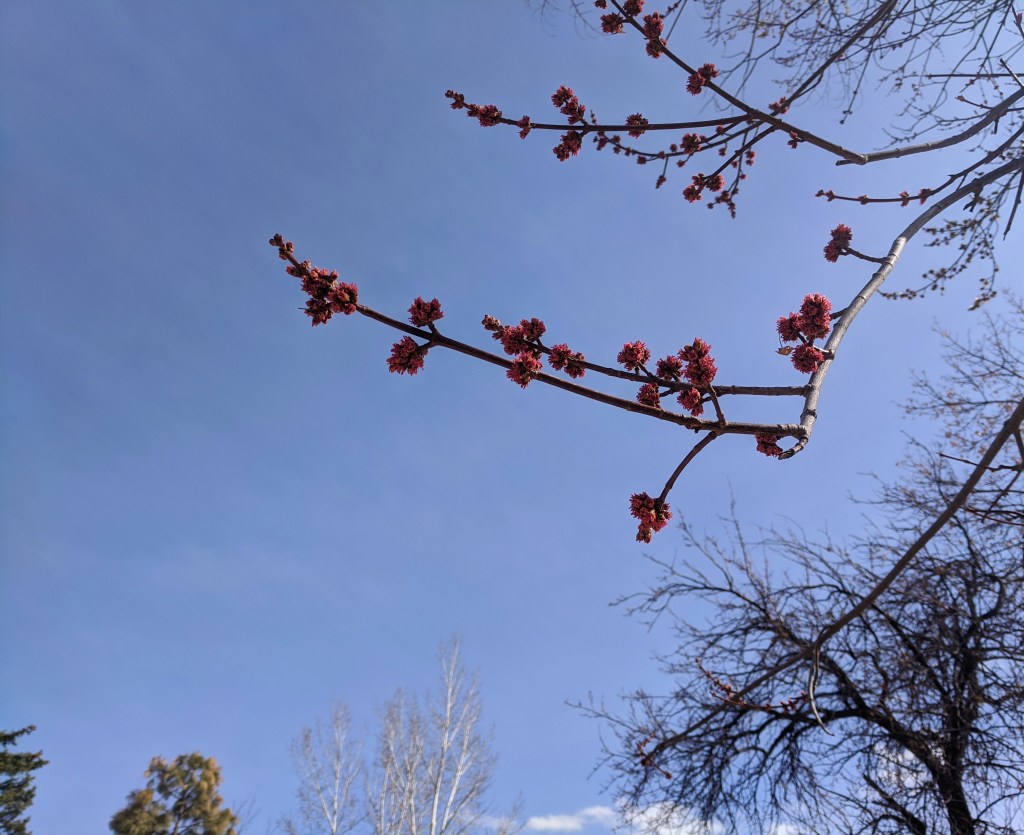
    But don’t swear off children just yet. Recall the snowdrops I was talking about. They’re not the only spring flowers. Snowdrops come and then crocuses come, and soon there are even daffodils. Here in Colorado the golden forsythia glow even on a cloudy day. There are green spikes of irises reviving in my neighbor’s garden bed. The sharp yucca plants become more vibrant. Lilacs are stirring. Trees are budding out before they sprout leaves. You may lay down on the landing of the staircase in exhaustion and open your eyes to discover your toddler bending over you to give you a goodnight kiss as he “tucka ‘oo in” for a nap. You may find that one day when you lay down next to him in the middle of the nap strike, you both begin to giggle uncontrollably, down on the floor, face to face. Making memories, I hope. Laughing memories that stay bright in the dusty storage banks of recall.

    Look for those moments. Hunt for them. Lay down – a patch as small as the landing of the stairs will do – and stare at the ceiling until you can remember what it is about this season that brings you joy. Don’t hustle too far too fast yet: let moments of happiness “tuck ‘oo in” to the season of in-between. It is better when we linger.

  • don’t rush a feeling

    don’t rush a feeling

    Sometimes when I am tired or sad or full of angst, I get annoyed at people who try to help me feel better. I don’t want to feel better right away. I need to get good and frustrated, to actually feel what I’m feeling, before I can start to turn it around. And sometimes people who want to help seem reluctant to let me feel my emotions. You can’t chase the rain clouds away before they’ve started raining. They’re not even your rainclouds if you don’t feel a few wet drops. It’s the same with the weird, sad, intense feelings. They need a moment to become real. If you welcome them in and offer them a glass of water, they’ll be more willing to leave when you show them the door. 

    I’ve maybe had more tough days than normal lately. That’s probably true for all of us. We’re locked in these four walls and coming face to face with selves we didn’t quite know. That’s a hard thing all on its own – meeting parts of us we didn’t know existed and aren’t sure if we like. Don’t worry. You’ll adjust. Just don’t rush yourself. It’s ok to recognize angst and feel it and get to know it before you move past it. If you ignore sadness and hurt and frustration, they’re not going to leave, they’re going to hover. You may have less outright tough days but there will be a black-ish tension lying under everything instead of the open type of pain that comes when you sit down and make introductions. 

    I’m not saying we should make Grief our roommate, give Frustration permission to rearrange the furniture, and let Angst do all the meal prep. There are limits. You like your couch where you like your couch, and it’s better to cuddle those throw pillows you’ve ordered online than it is to snuggle up with pain like a long-term houseguest. Besides, Frustration is notably terrible at remembering (or caring enough) to open the curtains and windows on a sunshiny morning, and frankly sunshine is as important for you as for your houseplants. Trust me on this. Open your window. I didn’t yesterday and look where that got me. Crabby by dinner time, and nothing short of two strawberry muffins and a walk under the stars would do for a cure.

    While we’re talking about open windows, when you need a place to sit and get acquainted with all the heavy things walking with you lately, find an open window. The trees aren’t trying to fix anything. They know how to listen, murmuring their own indistinct and indirect sympathies. They won’t share your secrets with anybody but the nosy squirrels – and maybe your frustrations will get planted with the autumn’s acorns. In a hundred years you can walk through the forest and look for the strength of oaks that grew out of your pain. The birds will gossip about their own hardships in sing-song lilts. Hey that’s a good idea – sing like a bird. They say getting tipsy and embarrassing yourself with karoke break-up songs is good for a broken heart. Maybe it’ll help to get our own angst out in the sad songs we’ve saved from the last season of grief. And the breeze somehow knows just how much you do or don’t want a hug even without your saying. Having your hair teased around without needing to respond might be the most therapeutic thing yet.

    Whatever happens, whatever it is pressing down on you right now, even as you’re lifting the blinds and wincing at the sun in your eyes, remember: There isn’t a quick fix. It’s a big feeling and it’ll pass, but it can’t go well if it’s pushed. Sometimes we just need to create a landing space for those things. Let them come to pass. If they’ve been greeted and acknowledged and offered a drink, they’ll be less clingy when we ask them to go. 

  • not your best work

    not your best work

    Today is the day the fears come. You’ve known they would – don’t we all? – but you kept doing the thing until they came because you weren’t so afraid in those moments. Maybe the thing was rock climbing or writing or dancing or working on making new friends. Doesn’t matter much; you get a good enough pep-talk and you can keep going off of that for a while because you feel so seen and so perfectly understood that you can move forward knowing somebody is at your back, cheering for you. 

    And then one day you feel alone again. (Maybe that is where most fear is based: we think failure means rejection and rejection, loneliness and so we vow never to fail, even if we must never try.) You felt alone again today. You imagined how it might be if you didn’t perform as well on your next attempt and you wrapped it in failure and you wrapped the failure in rejection and you looked at this like you were holding it in the palm of your hand, and then you threw it as far away from yourself as you could. Nobody, nobody wants to be lonely. 

    This, then, is the day that matters most. You will not do your best today. I understand that. I accept that, dear heart. I still care about you. So many people who will probably never know your best work and your worst work and even your mediocre work still care about you; will always care about you. Your skill is not going to be the measure of your loneliness. This day matters because it’s the day you fought back against the fear. It’s the day you rejected the fear of loneliness out of hand. Today is the day you stood up with your knees knocking and you didn’t sit back down again until you’d done that thing, because you’re brave and because you’re learning that this thing right here doesn’t define who you are or even how most people see you. 

    There is something to be said for rest days or cheat days or days off but we’re not going to say it here, because we’re not talking about rest and sabbaths and the need to breathe. We’re talking about the need to stop hyperventilating, the need to wipe the tears, the need to blow our noses and take a deep breath and put in one more day, however short, at the habit that’s being built. I said you won’t do your best work today but maybe that was wrong. Maybe you will. Maybe we should realize that some of our absolute best work isn’t the prettiest or the fastest or the longest or the best-played – it was the hardest, to which we still sat down and gave our best. 

    I want you to think so much about the work you’re going to do today that you forget to leave space for the fear. If you can’t sit down and do it right now, do the next best thing: start planning it. Plan to sit down after you’ve cleared the dinner dishes; plan to lace up your running shoes when you slip off your heels. Create the vision in your mind and make it as appealing as possible. The cool air brushing past you as you run. The familiar, comforting tap of the keys when you’re practicing piano. The slow way the yoga mat stretches gradually under your fingers, until your palms are damp and sweaty and sliding. Picture this work and picture your place in it. Picture your running route. Imagine the words you’re going to write. Eventually you’ll leave no room for procrastination. You’ll be fighting less fear because you’ll be armed with joy. 

    And sure; maybe that sounds a bit grandiose. It doesn’t work on every hard day. Some days stay hard right up through the moment you close the laptop and wonder vaguely how you learned to write such crap. I have done this. I still do this. It will always suck and it will never be easy. Skipping it will always seem like the best option on those days but it isn’t. I need you to believe me: when you think nobody is cheering you on, that is when I’m here cheering you on. I’m writing this for you to remember when you feel like you can’t possibly have anything good to produce or practice today. This day, darling? This impossible day right here? This is your best day. Don’t lose it.

  • don’t forget what you love

    don’t forget what you love

    Darling – will you hear me for a second? Don’t forget to love the things you love. I relearned this for my own self recently, and I think the story is important. Get cozy.

    I used to take my phone with me everywhere not so much for phone things but for the camera. In fact if there was a pretty aesthetic somewhere, I’d go and get my phone so I could try to find a way to photograph it. Raining? Let me find the prettiest view of raindrops through the right window. Sunshine? Maybe I could blow some bubbles and catch rainbow reflections. A pile of pillows in a coffee shop window? Excuse me while I’m the weirdo trying to subtly get the lighting just right and keep that lady working on her computer out of the photo. 

    Two summers ago we moved up to a summer camp for my husband’s job and there was no cell signal. We had wi-fi in a few select locations, but I began to use the lack of reception and internet as a good reason to disconnect from my phone on a regular basis. I don’t think that was a bad idea, but I began to lose my habit of cell phone photography. I wasn’t a professional by any means – I just loved trying to capture moments of beauty. But slowly that capturing slipped away. A whole year went by that way. I even started taking walks at home without my phone. I don’t think that was a bad practice either, but maybe I was too thorough. I went through our second summer at camp and have scarcely any photographs to show for it. 

    But now I’ve realized that since I’m not looking for beautiful pictures, I’m not even looking as much. I don’t notice the beautiful things that would have captivated me a year or two ago. And I miss that. 

    I set out to spend less time with my phone and I accomplished that goal, but I should maybe have been more specific with myself. I should maybe spend less time scrolling through social media from the comfort of my cozy corner chair, and more time out photographing the pretty things I love to share on Instagram. So darling, don’t forget to love what you love. You can find yourself missing pieces of you that you never intended to let go of, and that would be a real heart-break. The world needs all the beauty you have to offer. 

    It’s true that sometimes you need to step back from the things that you love for a little while. I stepped back from writing for a while and came back refreshed and ready to do more. It was wholesome, if tumultuous. I understand that we need breaks, time to rest, moments or months of quiet. But I came back and I think the coming back is important. 

    I’m just now coming back to taking pictures on my cell phone and it’s giving me life in ways I had forgotten about. What beautiful things have you forgotten to love? What favorite habits or life-giving places have you been setting aside for too long? Don’t forget that it’s ok to love the simple things – taking walks or going for a run, walking through a greenhouse or planting a garden, sitting at a coffee shop or practicing a pour over. These little habits of ours are restful and nurturing and odds are when you neglect them they’re taking more from you than you know. 

    Set aside some time to be frivolous. Take your phone with you on a long walk. Stop to photograph anything that catches your eye, big as a house or small as a leaf. Lace up your running shoes and do the extra mile, even if you feel like you should be home doing the dishes. Bake something and if you’re worried about that baking habit sticking to your hips, look up a new recipe and discover ways to make your favorite foods love you back. Just don’t forget to love the things that you love, babe.

  • on being bad

    on being bad

    You are probably pretty good at preaching this to your friends and really reluctant to hear it yourself, so let me be the one who tells you: being bad at this is part of the process. 

    We all understand why. I remember learning to play the piano when I was eight years old. I played silly little tunes with two or three notes repeated over and over. They were labeled with which finger I should use and the name of the key on the piano, and then there was a little diagram of the actual piano keys printed in the book and in case that weren’t enough, the ivory keys on the actual piano were marked with scotch tape. When my piano teacher came over for our second lesson I knew the song by heart and I had figured out a way to find middle C on the piano so I could peel the scotch tape off and display my knowledge. I got the wrong keys. 

    I was so impossibly new at piano that it took hours and hours of training before I could even play a mix of ten simple notes at one time. C-D-E-F-G with my left hand and C-D-E-F-G with my right hand, one octave higher. By then I could operate without the tape on Middle C and usually without the printed diagrams in my piano book. But the notes were still numbered for each finger. 

    I think as we get older, we begin to assume that this isn’t the process anymore. We’ve been impossibly new at living for so long, gone through so many years of elementary and middle and high school and maybe even a few years of general education courses at college that there isn’t much at which we think we have to start from scratch. But maybe we’re mistaken about that. Maybe just like those early months of piano, the only building blocks I had from my education so far were the numbers and the letters used to orient me on the keyboard. The alphabet A-G and counting to four didn’t give me a lot of skill on the piano; they just gave me the tools to sit down and start at the very beginning. 

    Darling, I get how embarrassing it is to work hard on a new project that’s been outlined and explained to death – and to realize the next week that you’ve actually missed your middle C altogether. You thought you had a better grasp of things than this. But let me remind you: you will only be this bad once. The very next week I knew exactly where middle C was and I’ve never forgotten since. I took baby steps. Sometimes I practiced longer than I needed to. I made progress. 

    It was the same way when I learned to water ski: first I wasn’t even sure how to put the skis on. Then I huddled in the water with my skis tied together so I wouldn’t accidentally do the splits – and I still couldn’t get up. And years later I finally tried to get up with one ski and I tried long enough and hard enough that I made it. That fall when the lakes cooled down I went back to piano competitions and music theory tests and memorized pages of music from composers like Bach and Rachmaninoff. I was in high school. Eight-year-old me had put in the time being a beginner so that teenage me could enjoy having a skill. 

    It’s like that with writing. High school me put in the time writing stories and essays and book reports poorly so that college me could be a bit better and adult me can write a manuscript. I didn’t start writing manuscripts in middle school. I started writing paragraphs – bad paragraphs. And even now in a lot of ways I’m beginning new things, willing to be bad at them long enough to become better. I’m new-ish at blogging and new at joining a writer’s group and new at sending my work out into the world. I’m baby-bottom-soft at fiction, though I want to get better one day (so I keep at it in secret, and hope.) 

    I want to leave you with a secret though – and maybe it’s one you’ve already mastered but it’s one I’ve always been a little embarrassed about, and I hope by sharing, we can mitigate some shame for each other. 

    Begin privately.

    You don’t have to be brand new at something publicly. Start in the quiet. Begin small. Write a future blog post, and then another, and then another until you write one you think you can post. Post it. Write a bunch more until you’ve got another you want to share. It’s ok that this is a process. It’s ok to be new without being on the front page while you’re new. Sometimes I consider my blog the safe place, where I write without the severe editing I put my essays through. Sometimes I don’t even publish things there until I’ve reworked and edited them to my own satisfaction. Sometimes I write something just for the practice of it and I never go back to use it again. 

    But however you practice, however you learn, don’t give up being new at something just because you’re new. Remember what I said earlier: this is the worst you’ll ever be. Next week’s blog post will be more practiced. You’ll remember where the keys are. You’ll figure out how to number your fingers so habitually you’ll know them by instinct. You’ll learn to water ski so proficiently you’ll be dropping a ski, jumping the wake, getting up on one foot. Just remember darling: you’ve got to be terrible first if you ever want to be good.

  • some assembly required

    some assembly required

    Do we build our lives moment by moment? 

    I have nearly finished arranging the wall above our chairs in the living room. A large framed poster, a small piece of art from a craft fair, two photo grids with miniature clothes pins, a star-chart, a macramé hanging. One framed picture card left to hang. A few photographs left to clip up to the photo grid. Not complete, but close. 

    I’ve collected the things over a long time. It took even longer to realize I wanted a gallery wall like this. I’ve never fallen in love with the gallery walls Pinterest has to offer when I search for them. But somehow the homemade macramé, year-old star chart, framed poster from an Airbnb, photo-grids that are just gold-colored cooling racks from a kitchen, and craft fair art from ten years ago all belong together. A motley crowd, joined by the fact that I admire them, and some occasional overlapping colors. 

    In so many ways we’re moving into this new home the way I’ve collected art for our wall. Piece by piece, bit by bit. We settle one thing here and then there until we find where it belongs, where we love it. Should the clock stay in the kitchen, or do we hang the spice rack there next to the fridge and move the clock to the dining room, pop of color between two windows? I pushed the huge, wheeled coffee table back and forth across the room three times in one day while Erik napped. I stopped when I was too tired to remember my own opinion about where it should go, and too tired to push it anymore. We grew to rather like it where it is though, and I haven’t had to sacrifice anymore of Erik’s nap times to shuffle it around. Good thing too, as there’s a box with bathroom cabinet supplies waiting out in the garage and I still don’t know where my mixing bowls are.

    Sometimes I feel as if all of life were scattered piecemeal around like this, waiting to be unpacked and admired, or not, depending on our own choices and actions. The choose-your-own adventure novel happening right here when I decide to move the clock and leave the writing desk; who knows what lives will begin or end on those decisions? 

    The most wonderful moments of our lives are tucked in, just waiting to be noticed and gathered up over years. A picture, a feeling, a kiss. They’re as real as the photos clipped to the gold kitchen cooling racks and as intangible as the seconds stepping steadily by in the clock. You’ve got to keep your eyes open. 

    At this moment in these years, I think my eyes are open. I call Erik sweet baby boy child and I feel his smile alter the thrumming of my heart when I do. I stand on the first step to kiss Grant and some days my heart stops altogether, just for a second; just to hold that soft moment out of time, where it belongs. 

    Every morning the waving arms of the trees trace their arcs across the floor. Every evening the faint luminescence of the moon ignites the snow in cool sparks and glows subtly through the white curtains. Every week I get a text from Johanna and I send one and we slowly plan around our baby boys’ naps to spend time together, sipping hot coffee or pushing strollers on long walks. The trickle of friendship seems to color all of my days by the buzzing of texts on my phone and the dates we keep for thrift shopping, eating gyros, stumbling into Toddler Time at the library only a few minutes late. 

    In our last home the walls were plaster, no hanging of picture frames allowed without the express permission and assistance of the landlord. I resorted to the use of command strips. I didn’t want his help with my interior decorating. It felt odd and intrusive. The small blue picture-card in its glass frame wasn’t sticking with the command strips I’d stuck to the back of it, so I carefully unscrewed the small bracket for hanging and saved it in my toolbox. The frame was flat enough against the wall then; the command strips were still on it when I unpacked the first box of our décor in the cottage. 

    It was just a guess that the hanging bracket would be in the toolbox, in the capsule of nails and tacks I kept there, but they were. I took them out, found the Philips screwdriver with the right sized head. I’m not new to a toolbox but I’m still a bit timid around it. And there I was anyway, getting a picture ready to hang on the gallery wall I’d designed. Piece by piece, year by year, beautiful things have come and stayed. Friendships, photographs, clocks, coffee tables, coffee dates, a family. 

    Ikea furniture comes with the prior knowledge that some assembly is required. You can walk through the maze of assembled showrooms and show-homes with a belly-full of Swedish meatballs from their café, but when you pick that furniture out of the warehouse and put in on your unwieldy cart, you’ve got a box full of pieces, an instruction manual with no words, and one extra wooden peg for good measure. Assembly, styling, use, appreciation; all are up to you now. Nobody’s going to come and hang the mirror on the floor-to-ceiling cabinet that holds your newly inspired minimalist wardrobe and bookshelf both. You’ll never sit in the chair if you don’t start twisting in the screws, pounding in the pegs, attaching the legs. 

    Life is a lot like that, I think. You can get all the good things in the world and you’ll never see them if you don’t look. You’ve got to put together the pieces. 

    I don’t think life is easy. There are months when grief drives through you like the twisted sharp steel of a train wreck. You feel the sharpness in your throat and the throbbing in your mind and the heaviness in your feet. Yes, those days come and sometimes they come to stay for a while. 

    But when they go again? When the sun traces tree-shadows on the floors like moving laughter, when the kiss is long and slow, the evening hands you a cup of wine, the morning brings a smiling toddler in footy pajamas sliding down the stairs on his tummy – we’d be fools not to laugh along.